-
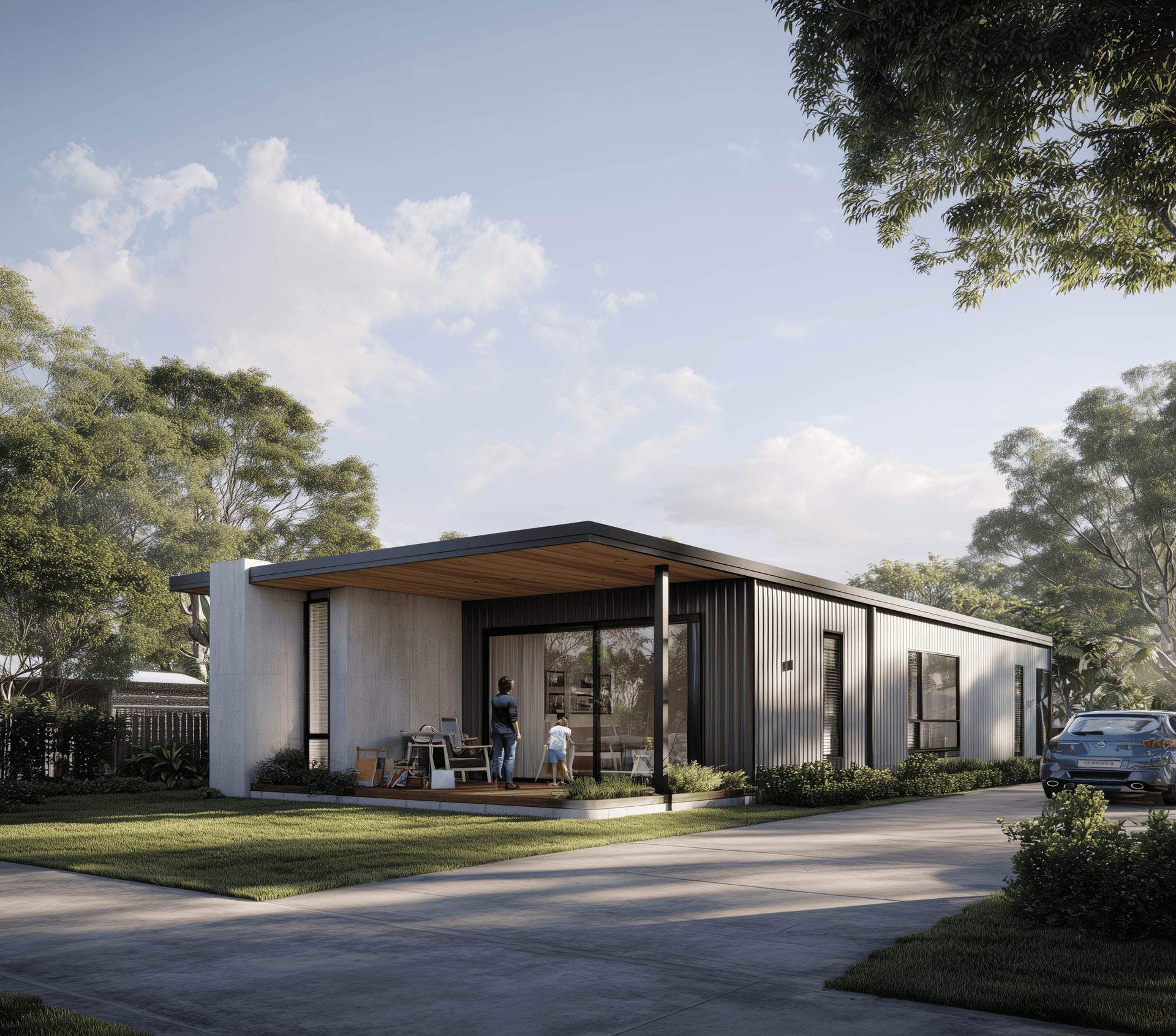
More Homes,
Delivered Faster,
On Land Queensland
Already Owns
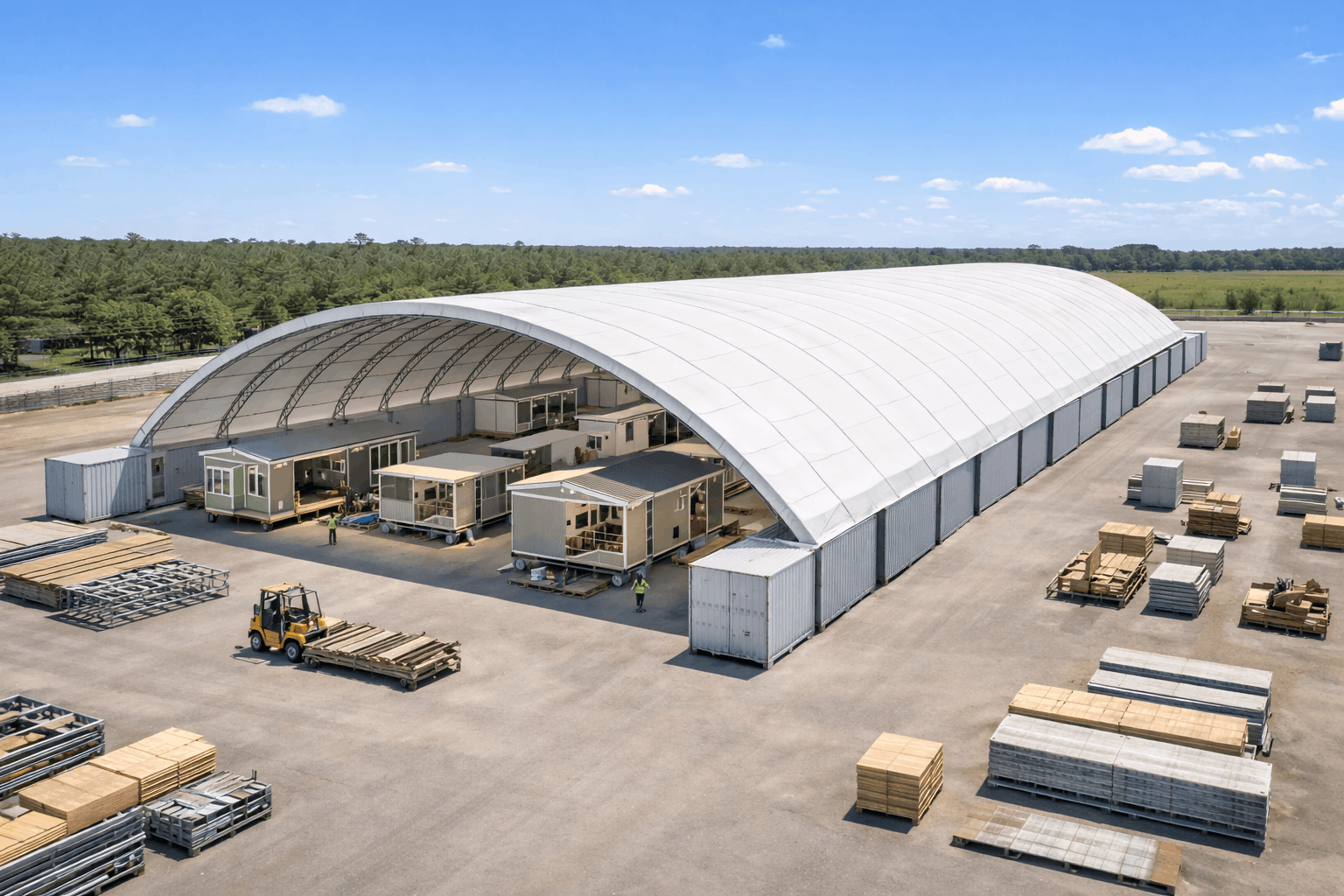
A lot enters the program only in the turnover window when residents move on: when a lease ends, or when a resident's circumstances change and they leave the property. No sitting tenant is ever approached, and no occupied lot is ever used. Each home is factory-built to a fixed price, installed in approximately twelve weeks, and allocated through the social housing register alongside the existing house on the lot. Where one home stood, two return to service, for the roughly 5,500 households allocated to social housing each year. The homes are financed and built at no capital cost to the State, and ownership of every home transfers to the State at the end of a fixed lease term.
These are not temporary pods. They are Next Door Homes: permanent, self-contained, accessible homes designed for dignity, durability and faster delivery.
No sitting tenant is asked to do anything. The arrangement is disclosed and agreed in the lease before any new tenant moves in.
Views have formed about this proposal before any document from us has been lodged. Here is each claim, and the facts.
Figures are deliberately conservative and drawn from published State data. RHQ welcomes every ratio being re-run.
Queensland already right-sizes its social housing. Every Next Door Home extends that work from the supply side: a purpose-built, accessible dwelling suited to the applicants the register most struggles to place, including older people and people with disability, added to the pool without involving a single sitting tenant. And because each home sits behind the existing house on the same lot, every suitable property returns to service with two homes where there was one.
State Government
Owns every lot throughout, allocates every home from the social housing register, and takes ownership of every Next Door Home at the end of the lease term.
National Affordable Housing (NAH)
A regulated Tier 1 community housing provider. Manages tenancies and supports residents across the program.
Institutional funding partners
Finance and build the homes through a project company at no capital cost to the State, with capital aligned to essential social infrastructure outcomes.
RHQ
Coordinates site identification, home delivery, compliance and asset execution.
RHQ is preparing to lodge a detailed submission under the Queensland Government's Exclusive Transactions framework, addressing each of its assessment criteria, and each concern raised to date, on the record. We welcome questions in writing, and the opportunity to answer them the same way.
We know that people have questions about how RHQ works, what Next Door Homes are, and how this model differs from other offsite or prefabricated housing projects. Here are some of the most common.
Next Door Homes are high-quality, factory-built homes placed on suitable State-owned social-housing lots within existing neighbourhoods. They are permanent, self-contained, accessible homes, designed for dignity, durability and long-term performance, and every one of them is owned by the State.
No. These are not temporary pods. They are permanent homes designed for dignity, liveability and long-term performance.
While both sit broadly within offsite construction, the approaches are materially different. That project involved partially exposed assemblies that suffered water damage during on-site completion. Next Door Homes are predominantly sealed, self-contained single-home units, with the great majority of construction, fit-out and quality assurance completed before the home arrives on site, and they are placed as distributed homes within established neighbourhoods, not as a concentrated precinct.
No. The proposal uses only lots that become available at natural turnover: when a lease ends, or when a resident moves on because their circumstances change. No sitting tenant is ever approached and no occupied lot is ever used. The arrangement is disclosed and agreed in the lease before any new tenant moves in.
No. The land stays in State ownership throughout, nothing public is sold, and no existing home changes hands.
The new homes are financed and built by a project company at no capital cost to the State, then leased for a fixed term, with ownership of every home transferring to the State at the end of it. This is the structure Queensland already uses for schools, hospitals and transport.
Throughout the lease, every Next Door Home is a public housing home: allocated by the department to a household on the register, let at social housing rents, and managed by a regulated Tier 1 community housing provider, which is stated Queensland policy.
Queensland ends up owning more homes than it started with, and does not pay to build them.
Only from natural turnover in the existing State-owned portfolio. Queensland's social housing stock generates an estimated 100 to 180 detached, installation-suitable vacancies each year, against an ask of 100 homes. The pipeline is proven before the program scales: key principles agreed, then an RHQ-funded verification phase, then a pilot, then the program. Government commits no capital at any stage before the evidence exists.
Traditional delivery remains important, but it is slower and more constrained by land acquisition, planning timeframes and fragmented delivery. Next Door Homes complement traditional approaches by creating homes faster on land that is already in public ownership.
Because that is exactly what they are: new homes, placed next door to existing homes, within real neighbourhoods, close to transport, services, support networks and community life.
Rapid Housing Queensland is a public-purpose enterprise focused on delivering Next Door Homes on State-owned social-housing land.
We coordinate site identification, home delivery, compliance and partnership alignment in collaboration with National Affordable Housing, government and institutional capital.
Our purpose is simple: to help Queensland deliver more homes, faster, using a smarter model that works with existing communities rather than waiting for entirely new ones.